
In the realm of modern business operations, Cloud-Based Payroll Services have emerged as a game-changer, offering efficiency, flexibility, and security like never before. This comprehensive guide delves into the intricacies of cloud-based payroll solutions, shedding light on their benefits and functionalities.
From the seamless integration with other systems to the cost-effectiveness and compliance features, this overview will equip you with the knowledge needed to navigate the realm of cloud-based payroll services with confidence.
Introduction to Cloud-Based Payroll Services
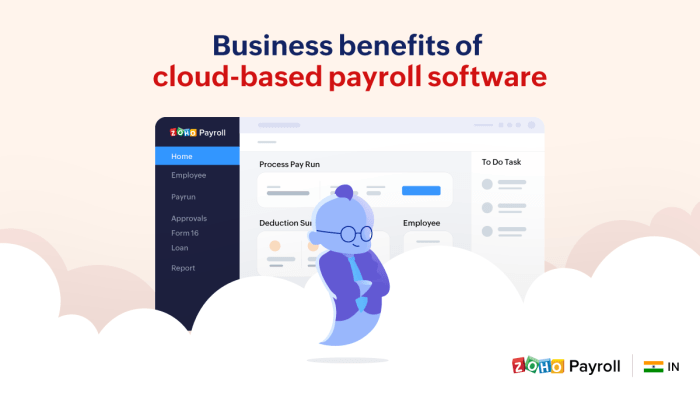
Cloud-based payroll services refer to online platforms that allow businesses to manage their payroll processes remotely through the internet. These services store all payroll data on secure servers in the cloud, eliminating the need for physical storage and manual processing.
Benefits of Using Cloud-Based Payroll Services
- Increased Accessibility: Employers and employees can access payroll information anytime, anywhere, as long as they have an internet connection.
- Cost-Effective: Cloud-based services eliminate the need for investing in expensive payroll software or hardware, saving businesses money in the long run.
- Improved Accuracy: Automation features reduce the risk of human error in calculations and data entry, ensuring accurate payroll processing.
- Enhanced Security: Cloud-based payroll services often come with advanced security measures to protect sensitive payroll data from cyber threats.
Overview of How Cloud-Based Payroll Services Work
Cloud-based payroll services typically involve the following steps:
- Employee Data Input: Businesses input employee information such as hours worked, wages, and deductions into the cloud-based system.
- Automated Calculations: The system automatically calculates gross pay, deductions, and net pay based on the data inputted, reducing the risk of errors.
- Direct Deposits and Tax Filings: Cloud-based services can facilitate direct deposits to employees’ bank accounts and handle tax filings to ensure compliance with regulations.
- Reporting and Analytics: Employers can generate reports and analytics on payroll expenses, employee costs, and other relevant data to make informed decisions.
Features of Cloud-Based Payroll Services
Cloud-based payroll services offer a range of features that streamline and enhance payroll processing for businesses of all sizes. These key features include:
Automation
Automation is a central feature of cloud-based payroll services, allowing for the automatic calculation of wages, taxes, and deductions. This reduces manual errors and saves time for payroll administrators. Additionally, automated reminders and notifications help ensure compliance with payroll deadlines and regulations.
Data Security
Cloud-based payroll services prioritize data security, with robust encryption protocols and secure data centers. This ensures that sensitive employee information is protected from unauthorized access or breaches.
Accessibility
One of the main advantages of cloud-based payroll services is the ability to access payroll data anytime, anywhere, as long as there is an internet connection. This flexibility allows for remote work capabilities and easy collaboration among team members.
Scalability
Cloud-based payroll services are highly scalable, making them suitable for businesses experiencing growth or fluctuations in employee numbers. The ability to easily add or remove employees from the system ensures that payroll processing remains efficient and accurate.
Integration
Many cloud-based payroll services offer integration with other business systems, such as accounting software or time-tracking tools. This seamless integration streamlines data transfer processes and reduces the need for manual data entry.Overall, the features of cloud-based payroll services provide businesses with a modern and efficient solution for managing their payroll processes effectively.
Security in Cloud-Based Payroll Services
Cloud-based payroll services prioritize security to protect sensitive employee information.
Security Measures Implemented
- Encryption: Data is encrypted both in transit and at rest to prevent unauthorized access.
- Multi-factor authentication: Users are required to provide multiple forms of verification to access the system.
- Regular security audits: Continuous monitoring and assessment of security protocols to identify and address vulnerabilities.
Importance of Data Encryption
Data encryption is crucial in cloud-based payroll services as it ensures that sensitive information such as employee salaries, social security numbers, and bank account details are protected from cyber threats. By encrypting data, even if unauthorized parties gain access to it, they will be unable to decipher the information without the encryption key.
Protection of Sensitive Employee Information
Cloud-based payroll services employ advanced security measures like role-based access controls, data masking, and activity logging to safeguard sensitive employee data.
- Role-based access controls: Limiting access to payroll data based on job roles to prevent unauthorized viewing or modification.
- Data masking: Concealing sensitive information to ensure that only authorized personnel can view complete details.
- Activity logging: Tracking and recording all user activities within the system for audit trails and accountability.
Integration with Other Systems
When it comes to cloud-based payroll services, integration with other systems is crucial for streamlining processes and increasing efficiency. By seamlessly connecting with HR systems and accounting software, cloud-based payroll services offer a wide range of benefits to businesses of all sizes.
Integration with HR Systems
Cloud-based payroll services can integrate with HR systems to ensure that employee data is accurately synchronized across both platforms. This integration eliminates the need for manual data entry and reduces the risk of errors in payroll processing. By connecting payroll and HR systems, businesses can easily manage employee information, track time and attendance, and generate accurate payroll reports.
Advantages of Integrating Payroll Services with Accounting Software
Integrating payroll services with accounting software allows for seamless data flow between the two systems. This integration ensures that payroll expenses are accurately recorded in the company’s financial records, making it easier to track expenses, generate financial reports, and comply with tax regulations. By automating the transfer of payroll data to accounting software, businesses can save time and reduce the risk of errors in financial reporting.
Popular Integrations with Cloud-Based Payroll Services
Some popular integrations with cloud-based payroll services include:
- Integration with Time and Attendance Systems: This integration allows businesses to track employee hours worked and accurately calculate payroll based on time data.
- Integration with Benefits Administration Systems: By integrating payroll services with benefits administration systems, businesses can streamline the management of employee benefits and ensure accurate deductions in payroll.
- Integration with ERP Systems: Integrating payroll services with enterprise resource planning (ERP) systems allows for a comprehensive view of financial data and streamlines the overall business processes.
Cost-Effectiveness of Cloud-Based Payroll Services
Cloud-based payroll services offer significant cost savings compared to traditional payroll systems. By analyzing the cost-effectiveness of these services, businesses can better understand the financial benefits they can gain from adopting cloud-based payroll solutions.
Reduction of In-House IT Infrastructure Costs
One of the key ways cloud-based payroll services save costs is by eliminating the need for in-house IT infrastructure. With cloud-based solutions, businesses do not have to invest in expensive hardware, software, or maintenance of servers for payroll processing. This reduces the upfront capital expenditure and ongoing operational costs associated with maintaining an in-house payroll system.
- Cloud-based payroll services are hosted on the provider’s servers, allowing businesses to access the system through the internet without the need for on-premises servers.
- By outsourcing payroll processing to a cloud-based provider, businesses can reduce the costs of IT staff, server maintenance, software updates, and security measures.
- Businesses can also scale their payroll services as needed, paying only for the features and services they use, which helps in optimizing costs and avoiding overpaying for unused resources.
Comparison of Pricing Models
Different cloud-based payroll service providers offer various pricing models, allowing businesses to choose the one that best fits their budget and requirements. Understanding the pricing structures of different providers is essential for businesses to make informed decisions regarding their payroll processing needs.
| Provider | Pricing Model | Key Features |
|---|---|---|
| Provider A | Subscription-based | Unlimited payroll runs, tax filing services, employee self-service portal |
| Provider B | Per Employee Per Month | Basic payroll processing, additional fees for extra services |
| Provider C | Customized Pricing | Tailored solutions based on business size and requirements |
By comparing the pricing models of different cloud-based payroll service providers, businesses can evaluate the costs involved and choose a provider that offers the best value for money while meeting their payroll processing needs effectively.
Compliance and Regulations
Cloud-based payroll services play a crucial role in ensuring that businesses comply with labor laws and regulations. By leveraging advanced technology and automation, these services help organizations stay up-to-date with the ever-changing legal requirements related to payroll processing.
Role of Cloud-Based Payroll Services in Maintaining Regulatory Compliance
Cloud-based payroll services act as a centralized platform that streamlines payroll processes while ensuring compliance with labor laws and regulations. They help businesses avoid costly penalties and legal issues by automatically applying updates to reflect changes in legislation. Features such as automated tax calculations, compliance alerts, and secure data storage contribute to maintaining regulatory compliance.
- Automated Tax Calculations: Cloud-based payroll services accurately calculate taxes based on the latest tax laws, ensuring that businesses withhold the correct amounts from employee paychecks.
- Compliance Alerts: These services provide notifications and alerts to inform businesses about any upcoming regulatory changes or deadlines, allowing them to make necessary adjustments in a timely manner.
- Secure Data Storage: Cloud-based payroll services prioritize data security and compliance with privacy regulations, such as GDPR or HIPAA, to protect sensitive employee information from unauthorized access or breaches.
Benefits for Small Businesses
Cloud-based payroll services offer numerous advantages for small businesses, enabling them to streamline their payroll processes, increase efficiency, and reduce costs. Let’s explore how these services benefit small businesses in detail.
Scalability Options
Cloud-based payroll services provide small businesses with the flexibility to scale their payroll operations according to their needs. Whether a small business is experiencing growth or seasonal fluctuations, cloud-based solutions can easily adapt to accommodate changes in the workforce size. This scalability ensures that small businesses can efficiently manage payroll without the need for significant investments in infrastructure or resources.
Case Studies
One example of a successful implementation of cloud-based payroll services in a small business is XYZ Company. By transitioning to a cloud-based payroll system, XYZ Company was able to automate their payroll processes, eliminate manual errors, and improve compliance with regulations. As a result, the company saw a significant reduction in payroll processing time and costs, allowing them to focus on other aspects of their business.Overall, cloud-based payroll services offer small businesses the opportunity to enhance efficiency, reduce costs, and ensure compliance with regulations, making them an invaluable asset for growth and success.
Payroll Services Overview
Payroll services encompass the management of employee compensation, including salaries, wages, bonuses, and deductions. These services are crucial for businesses of all sizes to ensure accurate and timely payment to employees.
Components of Payroll Services
- Calculating employee wages based on hours worked or fixed salaries
- Deducting taxes, social security contributions, and other withholdings
- Issuing paychecks or facilitating direct deposits
- Generating and distributing payroll reports
- Handling compliance with labor laws and regulations
As we wrap up this exploration of Cloud-Based Payroll Services, it’s evident that these innovative solutions are reshaping the way businesses manage their payroll processes. With their user-friendly interfaces and advanced security measures, cloud-based payroll services are paving the way for a more streamlined and efficient future in payroll management.
FAQ Corner
How secure are cloud-based payroll services?
Cloud-based payroll services implement robust security measures such as data encryption and access controls to ensure the protection of sensitive employee information.
Can cloud-based payroll services integrate with accounting software?
Yes, cloud-based payroll services can seamlessly integrate with accounting software, streamlining financial processes and enhancing overall efficiency.
What cost savings can businesses expect from using cloud-based payroll services?
Businesses can benefit from reduced IT infrastructure costs and streamlined payroll processes, resulting in significant cost savings over time.


