
In today’s fast-paced world, businesses are turning to Automated Payroll Services to streamline their payroll operations efficiently. This innovative solution revolutionizes the way companies manage payroll, ensuring accuracy, compliance, and cost savings.
From simplifying complex calculations to enhancing security measures, Automated Payroll Services offer a comprehensive solution for modern businesses seeking a hassle-free payroll experience.
Introduction to Automated Payroll Services
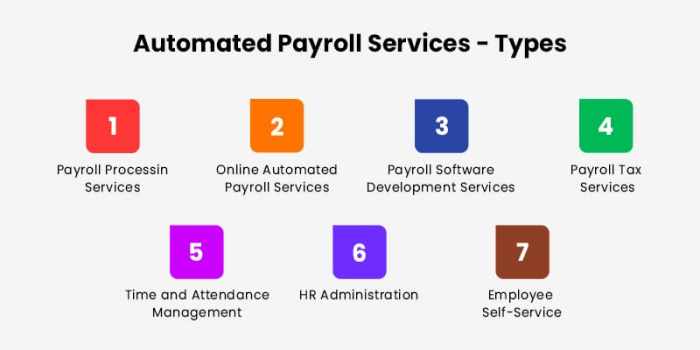
Automated payroll services refer to the use of technology and software to streamline the process of calculating and distributing employee payments. These services automate tasks such as calculating wages, withholding taxes, and generating paychecks, eliminating the need for manual intervention in payroll processing.Automated payroll services offer several benefits to businesses, including increased accuracy in payroll calculations, reduced processing time, and improved compliance with tax regulations.
By automating payroll tasks, companies can minimize errors and ensure that employees are paid correctly and on time.One key difference between automated payroll services and traditional payroll processing is the level of efficiency and accuracy involved. While traditional methods often rely on manual data entry and calculations, automated payroll services use advanced algorithms and software to process payroll quickly and accurately.
This not only saves time but also reduces the risk of errors that can occur with manual processing.
Cost-Effectiveness
Automated payroll services can help businesses save money by reducing the need for dedicated payroll staff and minimizing the potential for costly errors in payroll processing. By investing in automated payroll solutions, companies can streamline their payroll operations and focus on other core business activities.
- Automated payroll services eliminate the need for manual data entry, reducing the risk of errors in payroll calculations.
- By automating tasks such as tax calculations and paycheck generation, businesses can ensure compliance with tax regulations and avoid costly penalties.
- Automated payroll services offer scalability, allowing businesses to easily accommodate growth without the need for additional resources.
Features of Automated Payroll Services
Automated payroll services offer a range of features to streamline the payroll process and ensure accuracy and efficiency. By automating tasks like calculating wages, taxes, and deductions, these services save time and reduce the risk of errors. Additionally, they provide security measures to protect sensitive payroll data.
Key Features:
- Automated Calculations: Automated payroll services can calculate wages, taxes, and deductions accurately based on preset formulas and rules.
- Direct Deposit: Employees can receive their salaries directly into their bank accounts, eliminating the need for paper checks.
- Automatic Tax Filing: These services can file payroll taxes automatically, ensuring compliance with regulations and deadlines.
- Employee Self-Service: Employees can access their pay stubs, tax forms, and other payroll information online, reducing administrative tasks for HR.
- Integration with Accounting Software: Many automated payroll services integrate seamlessly with accounting software, simplifying financial reporting.
Automation Simplifies Tasks:
Automated payroll services simplify tasks like calculating wages, taxes, and deductions by eliminating manual data entry and the potential for human error. By automating these processes, businesses can ensure accuracy and compliance with regulations while saving time and resources.
Security Measures:
Automated payroll services employ robust security measures to protect sensitive payroll data, such as encryption, secure servers, and access controls. These measures help safeguard employee information and prevent unauthorized access or data breaches.
Implementation of Automated Payroll Services
Implementing automated payroll services for a company involves several key steps to ensure a smooth transition from manual processes to automated systems. It is essential to carefully plan and execute these steps to maximize the benefits of automation and streamline payroll operations effectively.
Transition from Manual to Automated Payroll Processes
Moving from manual to automated payroll processes requires a systematic approach to ensure a successful transition. Here are the steps involved in this process:
- Assess Current Processes: Evaluate the existing manual payroll processes to identify areas that can be automated and streamlined.
- Select a Suitable Software: Choose a reliable payroll software that aligns with the company’s requirements and can automate payroll tasks efficiently.
- Data Migration: Transfer employee data, salary information, and other relevant details from manual records to the automated system accurately.
- Customization and Configuration: Customize the payroll software settings according to the company’s payroll policies, tax regulations, and other specific requirements.
- Testing and Validation: Conduct thorough testing of the automated payroll system to ensure accuracy, compliance, and seamless integration with other HR systems.
- Training and Support: Provide comprehensive training to employees on how to use the new automated payroll system effectively. Offer ongoing support and guidance to address any issues or challenges that may arise during the transition.
Importance of Training Employees
Training employees to use the new automated payroll system is crucial for the successful implementation and adoption of automated payroll services. Here’s why employee training is essential:
- Efficiency and Accuracy: Proper training ensures that employees can navigate the system efficiently, input data accurately, and process payroll tasks without errors.
- Compliance and Security: Training helps employees understand the importance of maintaining data confidentiality, following security protocols, and complying with regulatory requirements.
- Employee Empowerment: Training empowers employees to take ownership of payroll processes, troubleshoot minor issues, and utilize the system’s features effectively.
- Smooth Transition: Well-trained employees are more likely to embrace change positively, adapt to new technologies, and contribute to the overall success of the automated payroll system.
Benefits of Using Automated Payroll Services
Automated payroll services offer numerous advantages to businesses in terms of time and cost savings, accuracy, and compliance with tax regulations.
Time and Cost Savings
Automated payroll services significantly reduce the time and effort required for manual payroll processing. By automating tasks such as calculating salaries, deductions, and taxes, businesses can streamline their payroll processes and eliminate the need for manual data entry. This results in considerable time savings for HR staff, allowing them to focus on more strategic tasks. Additionally, automation reduces the risk of errors and ensures that payroll is processed efficiently, ultimately saving businesses money by minimizing the resources needed for payroll management.
Reduced Errors and Tax Compliance
One of the key benefits of using automated payroll services is the reduction of errors in payroll processing. Automation eliminates the possibility of human error in calculations, ensuring that employee salaries, taxes, and deductions are accurate. Moreover, automated payroll systems are designed to keep up-to-date with changing tax laws and regulations, helping businesses stay compliant with tax requirements and avoid penalties for non-compliance.
This not only saves time but also mitigates the risk of costly mistakes in payroll management.
Improved Efficiency and Accuracy
Automated payroll services improve overall efficiency by streamlining the payroll process and reducing the time spent on manual tasks. With automated calculations and data management, payroll processing becomes more accurate and reliable. Employees can receive their salaries on time, and businesses can generate reports quickly and easily. By minimizing the potential for errors and delays, automated payroll services enhance the accuracy of payroll processing, leading to greater employee satisfaction and improved financial management for businesses.
Comparison with Manual Payroll Services
Automated payroll services offer several advantages over manual payroll processing, but they also come with their own set of disadvantages. Let’s delve into the comparison between the two methods to understand the implications for businesses.
Advantages of Automated Payroll Services
- Increased accuracy in calculations due to automated systems.
- Time-saving benefits as tasks are streamlined and automated.
- Reduced human errors and potential compliance risks.
Disadvantages of Automated Payroll Services
- Initial setup costs and potential maintenance expenses.
- Dependency on technology, which can lead to downtime and disruptions.
- Less flexibility compared to manual processes for unique payroll needs.
Scalability of Automated Payroll Services
Automated payroll services are highly scalable and can cater to the needs of businesses of all sizes. Small businesses can benefit from cost-effective solutions, while medium and large enterprises can leverage advanced features for complex payroll requirements.
Potential Impact on Employee Satisfaction and Productivity
Automation in payroll processing can significantly boost employee satisfaction by ensuring timely and accurate payments. Employees are likely to feel more valued and motivated when payroll processes are efficient and error-free. Moreover, increased productivity can be observed as HR teams spend less time on manual tasks and focus on strategic initiatives to enhance the overall work environment.
Role of Technology in Modern Payroll Services
Technology plays a crucial role in modern payroll services, revolutionizing the way businesses manage their payroll processes. From AI and machine learning to integrated software solutions, technology has significantly enhanced the efficiency and accuracy of payroll operations.
Integration of Payroll Software with HR Systems
Incorporating payroll software with other HR systems streamlines processes by eliminating manual data entry and reducing errors. This integration ensures seamless communication between payroll, employee records, benefits administration, and timekeeping, resulting in a more cohesive and efficient HR function.
Real-time Reporting and Analytics
One of the key benefits of technology in automated payroll services is the ability to provide real-time reporting and analytics. Businesses can access up-to-date information on payroll expenses, employee hours, tax deductions, and compliance status instantly. This data-driven approach allows companies to make informed decisions, identify trends, and forecast future payroll needs accurately.
As we wrap up our discussion on Automated Payroll Services, it’s evident that embracing automation in payroll processes brings a myriad of benefits. With time and cost savings, reduced errors, and improved efficiency, businesses can elevate their payroll management to new heights.
Detailed FAQs
How secure are Automated Payroll Services?
Automated Payroll Services typically come with robust security measures in place to protect sensitive payroll data, ensuring confidentiality and compliance.
Can small businesses benefit from Automated Payroll Services?
Absolutely, Automated Payroll Services are scalable and cater to businesses of all sizes, offering tailored solutions to meet the specific needs of small enterprises.
What role does technology play in Automated Payroll Services?
Technology, including AI and machine learning, enhances Automated Payroll Services by streamlining processes, providing real-time analytics, and integrating with other HR systems for seamless operations.


